
What I Noticed at Roland Garros That Nobody Was Covering
I play tennis. Not at the level of the people I was watching, obviously. But enough to understand the obsession, the ritual, the particular silence that falls over a crowd just before a serve. When I bought my ticket to Roland Garros, I went as someone who loves both the sport and what surrounds it.
What I didn't expect was to spend most of my time thinking about the food.
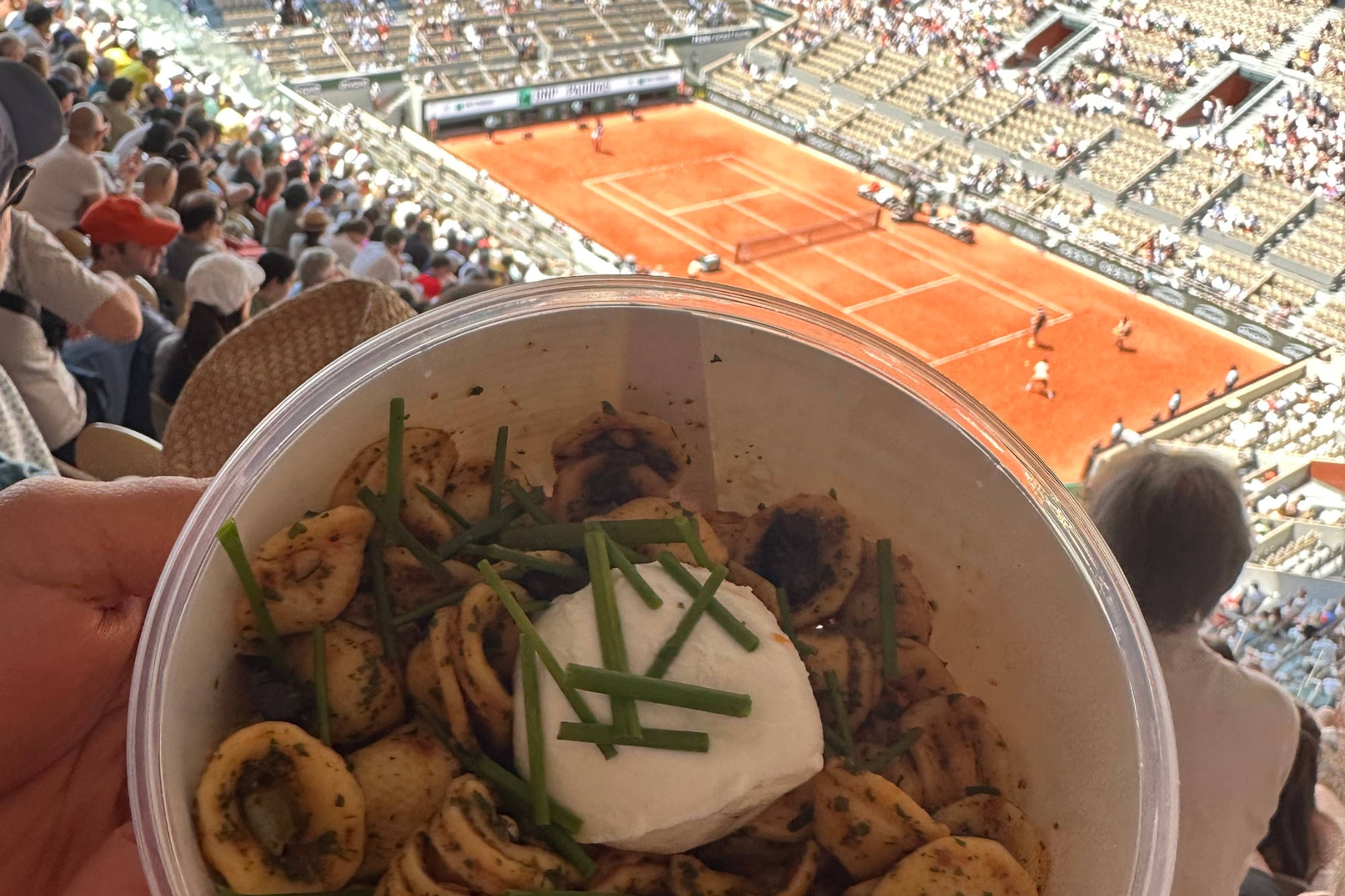
At Roland Garros, even the stadium tiers function as separate food systems, with each level offering its own mix of gourmet grab-and-go and hospitality service during play.
At Roland Garros, even the stadium tiers function as separate food systems, with each level offering its own mix of gourmet grab-and-go and hospitality service during play.
Not the hot dogs and croque-monsieurs, though those have their own devoted following among the regulars. I mean the other food. The food that most of the cameras never show. The food happening in a 19th-century greenhouse less than two hundred metres from Court Philippe-Chatrier, where guests in L'Orangerie were being served four-course menus with regional wine pairings while match points were decided on the clay outside. The food at Le Pavillon, where the proximity to the players' training courts meant you could watch Alcaraz warming up while someone placed an amuse-bouche in front of you. The food in the broader 16th arrondissement neighbourhood, which comes quietly alive every May as the tournament draws the kind of international visitors who know how to find a good table.
I've spent my career at the intersection of food and experience, as a private chef in Los Angeles, as a culinary producer, as someone who has designed events for global brands on four continents. I know a well-executed hospitality operation when I see one. And what Roland Garros has built around its culinary offer is, by any measure, extraordinary. And almost entirely undocumented in food media.
At the edge of the 16th arrondissement, the signs toward Stade Roland Garros signal the start of three weeks when this corner of Paris operates differently.
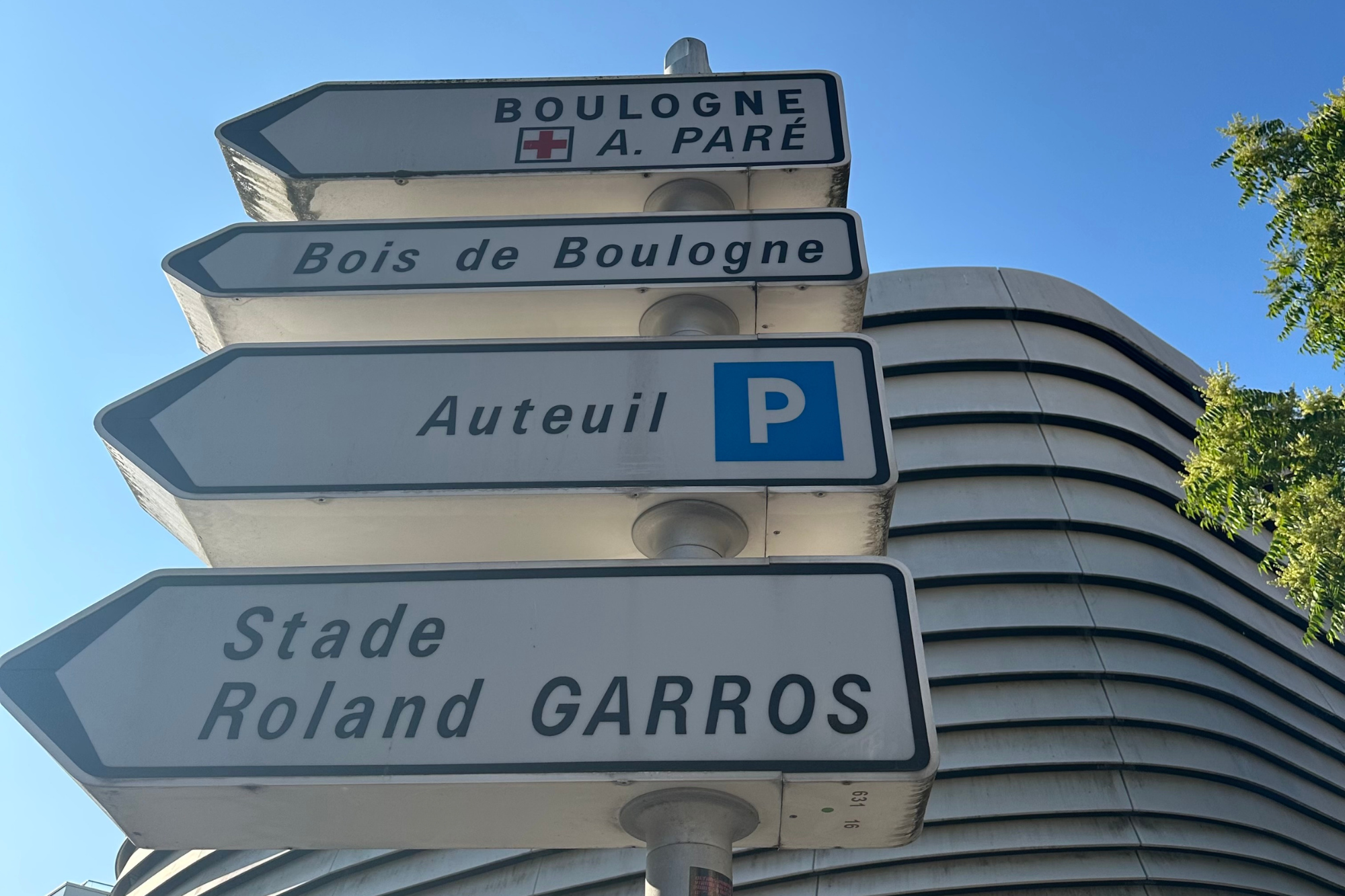
At the edge of the 16th arrondissement, the signs toward Stade Roland Garros signal the start of three weeks when this corner of Paris operates differently.
The tournament as a gastronomic event
There is a version of Roland Garros that most people never access. It runs parallel to the tennis, in the same physical space, but operates according to a completely different logic. Where the tennis is about competition and tension, this other Roland Garros is about pleasure, leisure, and the specifically French art of making hospitality feel effortless even when it is enormously complex.
France has always understood something that other sporting cultures are still learning: that the experience of attending a great event is not just about the main attraction. It is about everything that surrounds it. The meal before the match. The glass of Champagne at half-time. The terrace where you sit with your guests and debrief in the late afternoon light. These are not afterthoughts. They are the architecture of memory, the things you actually remember five years later, long after the specific score has faded.
Roland Garros applies this philosophy with unusual rigour. The official hospitality offer is curated to a level that most restaurants would recognise as fine dining. The catering at L'Orangerie, the restored greenhouse that serves as the tournament's signature hospitality venue, is not event catering in the conventional sense. It is, by every meaningful metric, a serious restaurant that happens to be operating inside a sporting venue for three weeks in May.
Inside the stadium grounds, designated viewing lawns fill during peak match days as spectators share picnic baskets brought from home or assembled from the tournament's culinary village.
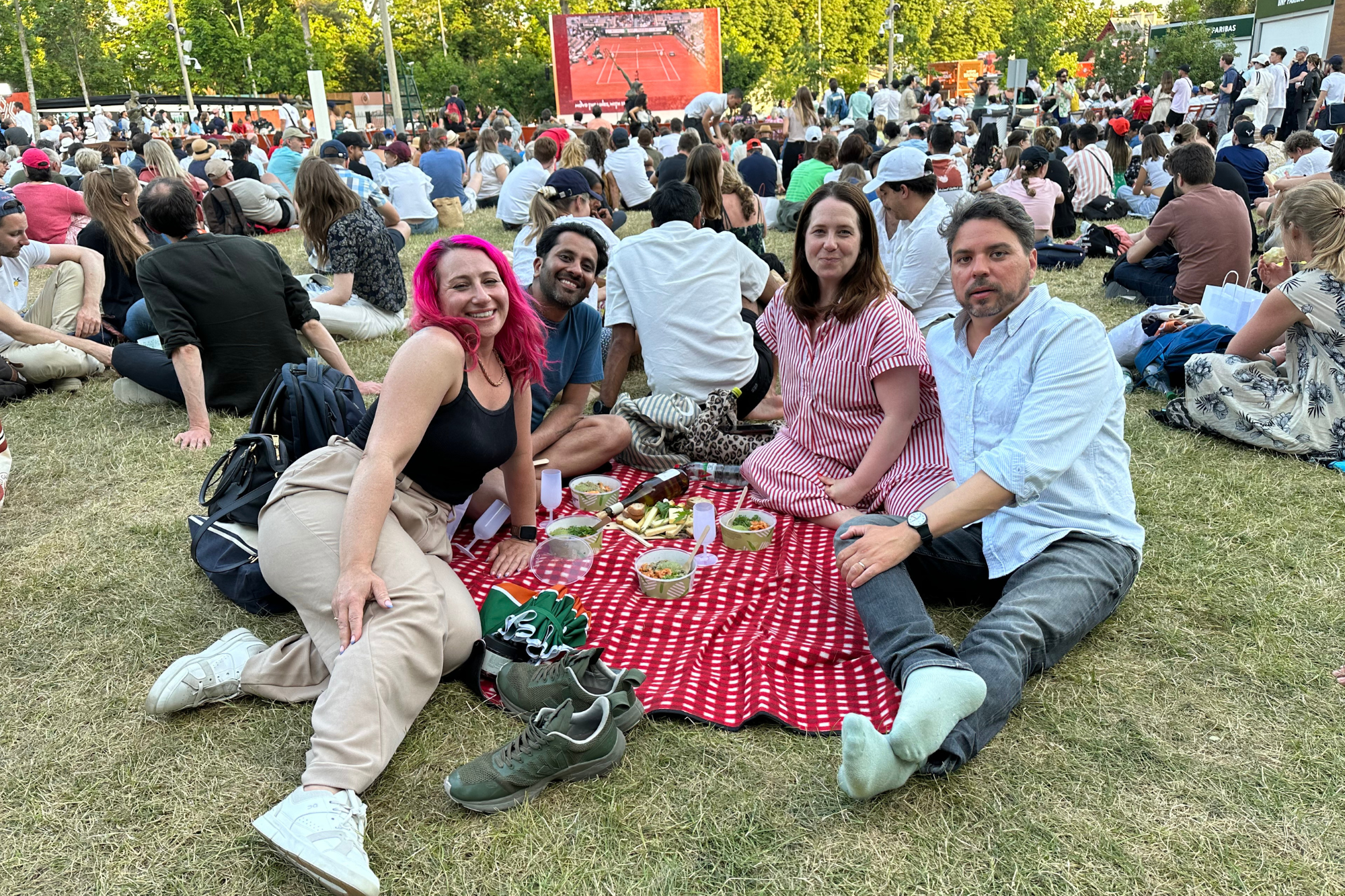
Inside the stadium grounds, designated viewing lawns fill during peak match days as spectators share picnic baskets brought from home or assembled from the tournament’s culinary village.
What the players eat
There is a second food story at Roland Garros that runs alongside the hospitality narrative, and it is equally underreported: what the players actually consume during a grand slam.
I've worked as a private chef for clients with specific performance-based dietary needs, people for whom food is not comfort or pleasure but fuel, strategy, recovery. The nutritional demands of a professional tennis player competing across a two-week tournament are extraordinary. They may play five matches. Each match could last anywhere from one hour to five. Between those matches they are managing inflammation, glycogen stores, hydration, sleep, and the specific demands of clay court movement, which is different from hard court or grass in ways that matter at the cellular level.
The kitchen operations that support the players at Roland Garros are largely invisible to the public, and yet they represent one of the most sophisticated applications of performance nutrition in professional sport. Watching the players move through the grounds, the specific things they're eating courtside, the timing of their meals relative to match schedules, tells you more about the science of elite performance than most broadcast commentary ever does.
This is a story that food media has almost entirely ignored. Sports media covers the tennis. Food media covers the hospitality. Nobody is covering the overlap.
Why Paris in May is a different city
There is something that happens to the 16th arrondissement during Roland Garros that is worth understanding if you've never experienced it. The neighbourhood, already one of Paris's quieter, more residential quarters, takes on a different character entirely. The restaurants that sit within walking distance of the stadium fill with a particular international crowd: agents, sponsors, former players, the kind of food-literate travellers who plan their meals as carefully as they plan their match schedule.
The brasseries and bistros within a twenty-minute walk of Stade Roland Garros do not advertise themselves as tournament restaurants. They don't need to. The regulars know. And for three weeks in May, these tables host conversations that would not happen anywhere else, the sport and the table and the city all colliding in a way that is specifically, irreducibly Parisian.
I ate well during Roland Garros. Better than I expected, and in ways I hadn't planned for. A lunch that stretched into the late afternoon. A wine recommendation from a sommelier who turned out to have opinions about Djokovic's diet. A table next to someone who had played the tournament in a previous decade and ordered with the authority of someone who had been coming to the same restaurant for thirty years.
The story nobody is telling
Food media covers restaurants. It covers chefs. It covers the emergence of new cuisines and the decline of old ones. What it rarely covers is food as the connective tissue of a great cultural event, the way that what people eat and drink shapes the experience of being somewhere specific, at a specific moment, in a way that cannot be replicated.
Roland Garros is one of the most concentrated expressions of French food culture that exists anywhere in the world. For three weeks in May, in a stadium in the 16th arrondissement, you can watch the best tennis players on earth compete on clay while eating food that reflects everything France believes about hospitality, pleasure, and the relationship between a meal and a moment.
I noticed this at Roland Garros. I've been thinking about it ever since. And I'm going back to report it properly.
Mariko Amekodommo is a culinary experience designer and strategic advisor to food and hospitality brands. She works globally across gastronomy, culture, and brand.